Library / Literature & Fiction
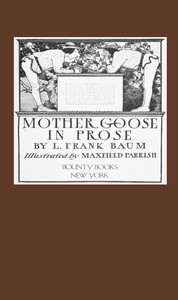
Mother Goose in Prose
- Pages
- about 166
- Category
- Literature & Fiction
- Language
- English
- Reading time
- 3 h at 250 wpm
From the opening
NONE of us, whether children or adults, needs an introduction to Mother
Goose. Those things which are earliest impressed upon our minds cling
to them the most tenaciously. The snatches sung in the nursery are
never forgotten, nor are they ever recalled without bringing back with
them myriads of slumbering feelings and half-forgotten images.
We hear the sweet, low voice of the mother, singing soft lullabies
to her darling, and see the kindly, wrinkled face of the grandmother
as she croons the old ditties to quiet our restless spirits. One
generation is linked to another by the everlasting spirit of song; the
ballads of the nursery follow us from childhood to old age, and they
are readily brought from memory's recesses at any time to amuse our
children or our grandchildren.
The collection of jingles we know and love as the "Melodies of Mother
Goose" are evidently drawn from a variety of sources. While they are,
taken altogether, a happy union of rhyme, wit, pathos, satire and
sentiment, the research after the author of each individual verse
would indeed be hopeless. It would be folly to suppose them all the
composition of uneducated old nurses, for many of them contain much
reflection, wit and melody. It is said that Shelley wrote "Pussy-Cat
Mew," and Dean Swift "Little Bo-Peep," and these assertions are as
difficult to disprove as to prove. Some of the older verses, however,
are doubtless offshoots from ancient Folk Lore songs, and have
descended to us through many centuries.
The connection of Mother Goose with the rhymes which bear her name is
difficult to determine, and, in fact, three countries claim her for
their own: France, England and America.
About the year 1650 there appeared in circulation in London a small
book, named "Rhymes of the Nursery; or Lulla-Byes for Children," which
contained many of the identical pieces that have been handed down to
us; but the name of Mother Goose was evidently not then known.
A short sample. Read the whole book
More to read
- "Captains Courageous": A Story of the Grand BanksRudyard KiplingLiterature & Fiction191 pages
- "Captains Courageous": A Story of the Grand BanksRudyard KiplingLiterature & Fiction191 pages
- "I Say No"Wilkie CollinsLiterature & Fiction428 pages
- "Miss Lou"Edward Payson RoeLiterature & Fiction409 pages
- "Speaking of Operations--"Irvin S. CobbLiterature & Fiction37 pages
Public-domain text from Project Gutenberg, Standard Ebooks or a similar open source. Copyright differs between countries. Rights holder? See our takedown process.