Library / Literature & Fiction
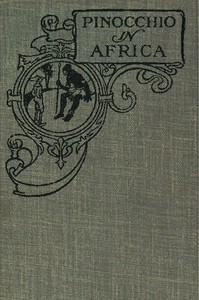
Pinocchio in Africa
- Pages
- about 88
- Category
- Literature & Fiction
- Language
- English
- Reading time
- 1.6 h at 250 wpm
From the opening
Collodis Pinocchio tells the story of a wooden marionette and of his
efforts to become a real boy. Although he was kindly treated by the old
woodcutter, Geppetto, who had fashioned him out of a piece of kindling
wood, he was continually getting into trouble and disgrace. Even
Fatina, the Fairy with the Blue Hair, could not at once change an idle,
selfish marionette into a studious and reliable boy. His adventures,
including his brief transformation into a donkey, give the author an
opportunity to teach a needed and wholesome lesson without disagreeable
moralizing.
Pinocchio immediately leaped into favor as the hero of Italian juvenile
romance. The wooden marionette became a popular subject for the
artists pencil and the storytellers invention. Brought across the
seas, he was welcomed by American children and now appears in a new
volume which sets forth his travels in Africa. The lessons underlying
his fantastic experiences are clear to the youngest readers but are
never allowed to become obtrusive. The amusing illustrations of the
original are fully equaled in the present edition, while the whimsical
nonsense which delights Italian children has been reproduced as closely
as a translation permits.
One morning Pinocchio slipped out of bed before daybreak. He got up
with a great desire to study, a feeling, it must be confessed, which
did not often take hold of him. He dipped his wooden head into the
cool, refreshing water, puffed very hard, dried himself, jumped up and
down to stretch his legs, and in a few moments was seated at his small
worktable.
There was his home work for the day,twelve sums, four pages of
penmanship, and the fable of The Dog and the Rabbit to learn by
heart. He began with the fable, reciting it in a loud voice, like the
hero in the play: A dog was roaming about the fields, when from
behind a little hill jumped a rabbit, which had been nibbling the
tender grass.
A short sample. Read the whole book
More to read
- "Captains Courageous": A Story of the Grand BanksRudyard KiplingLiterature & Fiction191 pages
- "Captains Courageous": A Story of the Grand BanksRudyard KiplingLiterature & Fiction191 pages
- "I Say No"Wilkie CollinsLiterature & Fiction428 pages
- "Miss Lou"Edward Payson RoeLiterature & Fiction409 pages
- "Speaking of Operations--"Irvin S. CobbLiterature & Fiction37 pages
Public-domain text from Project Gutenberg, Standard Ebooks or a similar open source. Copyright differs between countries. Rights holder? See our takedown process.