Library / Literature & Fiction
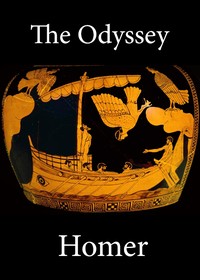
The Odyssey of Homer
by Homer
- Pages
- about 517
- Category
- Literature & Fiction
- Language
- English
- Reading time
- 9.5 h at 250 wpm
From the opening
There would have been less controversy about the proper method of
Homeric translation, if critics had recognised that the question is a
purely relative one, that of Homer there can be no final translation.
The taste and the literary habits of each age demand different
qualities in poetry, and therefore a different sort of rendering of
Homer. To the men of the time of Elizabeth, Homer would have appeared
bald, it seems, and lacking in ingenuity, if he had been presented in
his antique simplicity. For the Elizabethan age, Chapman supplied what
was then necessary, and the mannerisms that were then deemed of the
essence of poetry, namely, daring and luxurious conceits. Thus in
Chapman’s verse Troy must “shed her towers for tears of overthrow,” and
when the winds toss Odysseus about, their sport must be called “the
horrid tennis.”
In the age of Anne, “dignity” and “correctness” had to be given to
Homer, and Pope gave them by aid of his dazzling rhetoric, his
antitheses, his netteté, his command of every conventional and
favourite artifice. Without Chapman’s conceits, Homer’s poems would
hardly have been what the Elizabethans took for poetry; without Pope’s
smoothness, and Pope’s points, the Iliad and Odyssey would have seemed
rude, and harsh in the age of Anne. These great translations must
always live as English poems. As transcripts of Homer they are like
pictures drawn from a lost point of view. Chaque siècle depuis le xvie
a eu de ce côté son belvéder différent. Again, when Europe woke to a
sense, an almost exaggerated and certainly uncritical sense, of the
value of her songs of the people, of all the ballads that Herder,
Scott, Lonnrot, and the rest collected, it was commonly said that Homer
was a ballad-minstrel, that the translator must imitate the simplicity,
and even adopt the formulae of the ballad. Hence came the renderings of
Maginn, the experiments of Mr. Gladstone, and others. There was some
excuse for the error of critics who asked for a Homer in ballad rhyme.
A short sample. Read the whole book
More to read
- "Captains Courageous": A Story of the Grand BanksRudyard KiplingLiterature & Fiction191 pages
- "Captains Courageous": A Story of the Grand BanksRudyard KiplingLiterature & Fiction191 pages
- "I Say No"Wilkie CollinsLiterature & Fiction428 pages
- "Miss Lou"Edward Payson RoeLiterature & Fiction409 pages
- "Speaking of Operations--"Irvin S. CobbLiterature & Fiction37 pages
Public-domain text from Project Gutenberg, Standard Ebooks or a similar open source. Copyright differs between countries. Rights holder? See our takedown process.