Library / Literature & Fiction
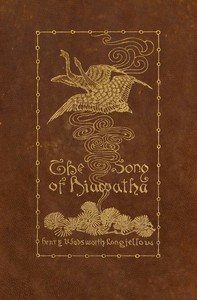
The Song of Hiawatha
- Pages
- about 117
- Category
- Literature & Fiction
- Language
- English
- Reading time
- 2.1 h at 250 wpm
From the opening
Introductory Note
Introduction
I. The Peace-Pipe
II. The Four Winds
III. Hiawatha’s Childhood
IV. Hiawatha and Mudjekeewis
V. Hiawatha’s Fasting
VI. Hiawatha’s Friends
VII. Hiawatha’s Sailing
VIII. Hiawatha’s Fishing
IX. Hiawatha and the Pearl-Feather
X. Hiawatha’s Wooing
XI. Hiawatha’s Wedding-Feast
XII. The Son of the Evening Star
XIII. Blessing the Corn-Fields
XIV. Picture-Writing
XV. Hiawatha’s Lamentation
XVI. Pau-Puk-Keewis
XVII. The Hunting of Pau-Puk-Keewis
XVIII. The Death of Kwasind
XIX. The Ghosts
XX. The Famine
XXI. The White Man’s Foot
XXII. Hiawatha’s Departure
Vocabulary
The Song of Hiawatha is based on the legends and stories of many North
American Indian tribes, but especially those of the Ojibway Indians of
northern Michigan, Wisconsin, and Minnesota. They were collected by
Henry Rowe Schoolcraft, the reknowned historian, pioneer explorer, and
geologist. He was superintendent of Indian affairs for Michigan from
1836 to 1841.
Schoolcraft married Jane, O-bah-bahm-wawa-ge-zhe-go-qua (The Woman of
the Sound Which the Stars Make Rushing Through the Sky), Johnston. Jane
was a daughter of John Johnston, an early Irish fur trader, and
O-shau-gus-coday-way-qua (The Woman of the Green Prairie), who was a
daughter of Waub-o-jeeg (The White Fisher), who was Chief of the
Ojibway tribe at La Pointe, Wisconsin.
Jane and her mother are credited with having researched, authenticated,
and compiled much of the material Schoolcraft included in his Algic
Researches (1839) and a revision published in 1856 as The Myth of
Hiawatha. It was this latter revision that Longfellow used as the basis
for The Song of Hiawatha.
Longfellow began Hiawatha on June 25, 1854, he completed it on March
29, 1855, and it was published November 10, 1855. As soon as the poem
was published its popularity was assured. However, it also was severely
criticized as a plagiary of the Finnish epic poem Kalevala. Longfellow
made no secret of the fact that he had used the meter of the Kalevala;
but as for the legends, he openly gave credit to Schoolcraft in his
notes to the poem.
A short sample. Read the whole book
More to read
- "Captains Courageous": A Story of the Grand BanksRudyard KiplingLiterature & Fiction191 pages
- "Captains Courageous": A Story of the Grand BanksRudyard KiplingLiterature & Fiction191 pages
- "I Say No"Wilkie CollinsLiterature & Fiction428 pages
- "Miss Lou"Edward Payson RoeLiterature & Fiction409 pages
- "Speaking of Operations--"Irvin S. CobbLiterature & Fiction37 pages
Public-domain text from Project Gutenberg, Standard Ebooks or a similar open source. Copyright differs between countries. Rights holder? See our takedown process.